Inspiration, Information and Practical Tips for Holistic Therapists and Trainees
Essential oil safety – 3 things you should avoid
Essential oil safety – 3 things you should avoid
I know there's a lot of misinformation out there about the essential oil safety and this is a bit of a red rag to a bull with me because using essential oils incorrectly can have very unpleasant and even serious consequences. And it's so easy to use them properly.
Essential oils are natural substances, but that doesn't mean that they are a 100% safe. It doesn't mean you can use them any way you like, and it doesn't mean that every oil is safe for every person all the time. When you think about it, snake venom is 100% natural, but nobody thinks that it’s 100% safe.
In this post, I'll explain
Three things you should never do with essential oils,
When and why it’s unsafe to use particular essential oils.
Would you prefer to listen instead? Here's the podcast episode:-
1. Don’t use essential oils undiluted on the skin
Essential oils need to be mixed in a fat-based substance like a natural vegetable oil, shower gel or a cream before you put them on the skin. The substance we use to mix the essential oils is called a carrier or a base.
How much essential oil do you use in your carrier or base?
You generally use a 1% blend or a 2% blend. A 1% blend means that you put one drop of essential oil in a teaspoon of your base. A 2% blend means you put 2 drops of essential oil in a teaspoon of your base.
A 1% blend is used for children between the ages of 1 year old and 12 years old, for pregnant women, for people who have sensitive skin and for anyone who is frail.
We use a 2% blend for all other adults. In aromatherapy terms an adult is anyone over 12 years old.
Essential oil safety for babies under 12 months
For a baby who is under 2 months old, you would make a ¼% blend, i.e. drop of essential oil to every 4 teaspoons of your base or carrier.
If you want to use two essential oils, for instance lavender and chamomile, you would use one drop of lavender and one drop of chamomile in 8 teaspoons of a vegetable oil or other carrier/base.
For a baby between the ages of 2 months and 1 year old, you would use a half a percent blend. And a half percent blend means that you would use one drop of essential oil in 2 teaspoons of a carrier/base.
If you want to use 2 different essential oils for a child between the ages of 2 months and 12 months, you would need to use 4 teaspoons of your carrier/base and one drop of each of the two essential oils.
However, there are particular essential oils you shouldn't use for children of different ages from newborn to one year old, so it’s always better to get the advice of an aromatherapist.
Why is it unsafe to use essential oils undiluted on the skin?
I know there is a lot of advice going around out there on Facebook and the Internet in general, telling you that it's safe to use essential oils undiluted on your skin.
Skin irritation
You might use essential oils undiluted on your skin and have no reaction, but there is a real risk of skin irritation, where your skin becomes irritated, inflamed, and red, sore, maybe itchy.
Sometimes there's no logic as to who might or might not have a reaction to using essential oils undiluted on the skin. I heard of a woman who was bathing her baby and using undiluted rose essential oil in the bath. She had heard that rose was safe and gentle, but she was not told anything about needing to dilute it.
The baby was fine, but the mother’s hands and arms right as far as her elbows were red and irritated for several days afterwards.
Skin sensitisation
What's worse than irritation is developing a sensitivity to an oil. If you use an essential oil in too high dilution or you don't dilute it at all, you can over time develop a sensitivity to the oil.
This means that your body sees the oil and every chemical within that oil as a threat. And then whenever you use anything that contains any of the chemicals in that oil, no matter how little you use, no matter how well diluted it is, your body still sees this as a threat. And because so many essential oils have similar chemicals, if you become sensitive to one, you become sensitive to a lot more.
Skin sensitivity has similar symptoms to skin irritation - red, inflamed, painful, itchy skin.
The difference between skin irritation and skin sensitivity
Skin irritation is dose dependent, it happens if you use too high a concentration or too much of a substance.
Skin sensitivity is when your body has learned to see the oil as a threat. And the skin reacts to the oil, no matter how much you use, or well diluted it is.
2. Taking essential oils by mouth
Taking essential oils by them is another big no no. Clinical aromatherapists and French doctors do prescribe taking essential oils by mouth but its very carefully formulated. And the essential oils are used in tablets, or pills.
I have often seen social media posts advising people to take a few drops of essential oil in a glass of water. This can be very dangerous.
Why is it dangerous to take essential oils by mouth?
There are two reasons. First, when you take essential oils by mouth, they have to fight through the mucus membrane, and the acid, in your digestive system. So this method is not efficient. And secondly, it's quite likely to burn as it passes through the digestive system.
My teacher learned this the hard way!
When she first started using essential oils, my first aromatherapy teacher, used to make herself a herbal drink whenever she had a cough or a cold coming on.
And she'd have all kinds of herbs and honey and water in a large jug. One day, she didn't have any fresh thyme. So she decided to use one drop of thyme essential oil, as it was natural, and, she thought, safe.
She stirred the mixture well, poured a glass and took a drink. She had a horrible burning sensation, from her mouth right down to her stomach, and she felt really ill for several days.
I have heard worse stories, of people who had fits, and even people who died from taking essential oils internally.
In short, taking essential oils by mouth is a very in efficient way of using them and it can be very dangerous.
3. Keep essential oils away from your eyes
And the third thing you shouldn't do with essential oils is let them get very close to your eyes.
When I give facials using essential oils I’m very careful not work close to the eyes. And I warn my client not to rub their eyes for the next half hour. If essential oil gets into the eyes, it can be very uncomfortable.
If you do happen to get essential oils into your eyes or someone else's eyes, the first thing to do is try and flush it out with plenty of water. If that doesn't work, then try and flush it out with either milk or a vegetable oil. That might sound a bit weird, but the reason we do that is essential oils dissolve in fatty based substance.
Essential oils that should be avoided in particular circumstances
There are particular essentials oils that shouldn't be used in certain circumstances.
Don't use citrus oils on the skin before using a sunbed or going out in bright sunlight.
Citrus oils, like orange, lemon, mandarin, tangerine, grapefruit, bergamot, etc can cause the skin to burn if you use them, even diluted, within 48 hours before going out in bright sunlight or using a sunbed.
Citrus oils contain a chemical that interferes with the production of melanin, the brown pigment that helps protect us from burning in the sun.
She thought bergamot would be nice as a perfume!
I was teaching an aromatherapy course a couple of years ago, and I explained, as I always did in the very first class, all about the contraindications to essential oils and how to use them. Including, of course, about citrus oils and that they can cause severe burns if you use them before going out in bright sunlight or using a sunbed. It was during the summer.
The following week, we had another class, and one of the students had burn marks on her wrists. And the girl beside her asked her what had happened to her wrists.
She replied a little sheepishly that she had got sunburned. The other student wanted to know how she got sunburned just on such a small area. Because she had put a tiny bit of Bergamot on her wrists before sitting in the sun. And the other girl said, “But did you not hear what Jenny said about not using citrus oils before going out in the sun?”
She had thought it was just a drop, and it wouldn't do any harm. It shows the power of essential oils. It might have been “just a drop” But essential oils are highly, concentrated substances, up to 300% more concentrated than the parent plant so you’re never using “just a drop”
Essential oils to avoid for sensitive skin
Then we have certain oils that you shouldn't use if someone has sensitive skin.
The following list is not exhaustive, there are so many essential oils available, I couldn't possibly cover them all.
Oils that come from spices including:-
• Ginger,
• Lemongrass,
• Black pepper,
• May chang,
• Clove,
• Cinnamon,
• Cardamom.
Other oils that may irritate sensitive skin
• Basil,
• Peppermint,
• Tea tree
As a general rule, avoid oils that come from spices and lemon scented oils (other than lemon) if you have sensitive skin. If you don’t have sensitive skin, you can use them in low dilutions, no more than 1%.
Essential oils to avoid for high blood pressure
There are some essential oils that can raise blood pressure in someone who has high blood pressure.
• Hyssop,
• Sage,
• Rosemary,
• Thyme,
• Peppermint.
I used to think that it was OK for an aromatherapist who had high blood pressure to use these oils in a treatment because the skin on the palms of the hands is the least absorbent skin on the body so you'll be absorbing less oil than your client would. But one of my students who had high blood pressure was using rosemary in one of his treatments. And he told me that he started to feel a bit woozy, and his blood, pressure seemed to have shut up.
So I advised him not to use rosemary, thyme, peppermint or sage again.
And I've advised any aromatherapist who has high blood pressure not to use any of these oils.
You probably won't see peppermint listed in any book (except my book) as being unsafe for anybody with high blood pressure. But I came across a case of a girl, another student of mine, who absolutely loved peppermint. She had it burning constantly and used it in practically every blend she made. On more than one occasion, I had to strongly encourage her not to include peppermint in a blend!
One day on her way to work, she started feeling really strange and she had to pull over, and wait for the feeling to pass. She was a nurse, luckily enough, because as soon as she got to work, she was examined. They said her blood pressure was sky high, and she didn't even have high blood pressure generally.
Since then, I've advised anyone who has high blood pressure not to use peppermint and for anyone else not to use this on a daily basis.
Essential oils to avoid for epilepsy
Anyone who has epilepsy shouldn't use
Fennel,
Hyssop,
Sage,
Rosemary.
These oils are very stimulating, they’re also described as “lipophilic”, which means they are attracted to fat, particularly the fatty tissue around the brain and spine. They can trigger fits in people who have epilepsy. Other people can use them safely.
She loved Fennel
You may have heard of Botanica and Rhiannon Lewis, one of the main organisers. Botanica is a huge annual aromatherapy convention. Rhiannon is a clinical aromatherapist, and she is an amazing teacher. She was talking one day about a girl that she had met, who had recently started using essential oils. She absolutely loved them, and she burned them all the time.
In the same conversation, she mentioned that she'd had epilepsy. She hadn't had a fit for years, but in the last few weeks, she had had several fits.
Rhiannon asked her what her favourite essential oil was. She said she particularly liked Fennel and that she used it most days. Rhiannon advised her not to use Fennel again.
That’s all about essential oil safety. The rules are simple and there aren’t a lot of them. Once you follow these rules you can confidently use essential oils as much as you like.
Jenny x
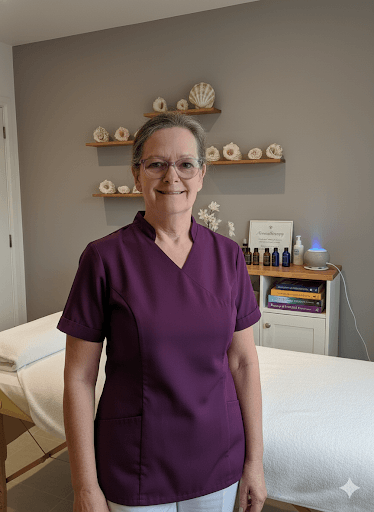
Hi, I’m Jenny
I’m an aromatherapist, reflexologist and holistic therapy tutor with over 30 years’ experience. I’ve been teaching since 1997, and this blog is where I share stories, practical information and a few things I’ve learned along the way.


Policies
Privacy Policy
Disclaimer
Terms of Service
© 2026 Essentials Holistic – Jenny Sheridan
Based in Dublin Ireland
Supporting therapists succeed globally.
+353 85 730 6332
All content is for educational purposes only and is not a substitute for medical advice.